
November 2026 · Newsletter · By CPI y Lic. Alejandro J. Corona Villarreal
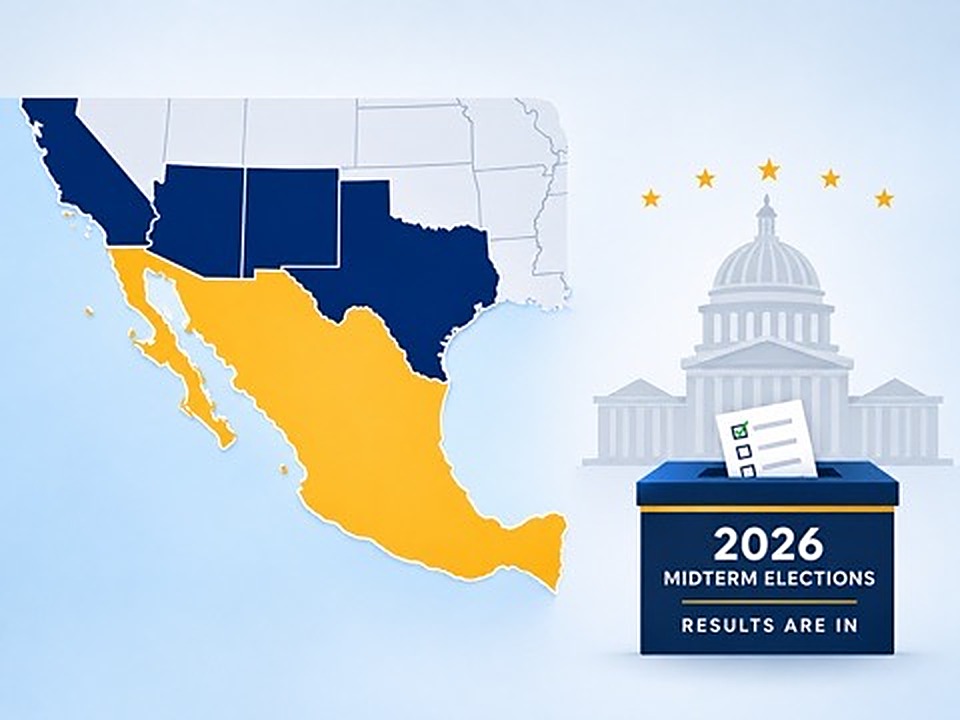
Key points: Democrats won Congress and all four border governorships; federal CTPAT and Executive Order 14411 obligations do not change; the new officials take office in January 2027.
In the November 3 midterm elections, the Democratic Party won majorities in the House of Representatives and the Senate (at least 54 of 100 seats). California, Arizona, New Mexico and Texas will also have Democratic governors; in Texas, Gina Hinojosa will be the first Democratic governor since 1995. The president remains the same, so the result is a divided government. Here is what it means for trade with Mexico:
U.S. customs programs and processes are federal. CBP, crossing times, CTPAT, the Form 5106 review and the Executive Order 14411 requirements for foreign importers remain in effect regardless of the election results. Supply chain security has support from both parties, so we do not expect it to be reversed.
After the Supreme Court ruling in February, the IEEPA tariffs were struck down and CBP is processing refunds. The Section 232 tariffs (steel, aluminum, autos, trucks and others) and the 10% Section 301 duty on goods that do not qualify under the USMCA remain in place. The new Congress could require its approval for lasting tariffs or limit their scope, but any law needs the president’s signature or two-thirds of both chambers to override a veto.
Since July 1, the agreement remains in force under annual reviews. President Sheinbaum said the talks continue as usual, since Mexico negotiates with the federal government, not with Congress. We recommend confirming that your products meet the rules of origin: that is what protects them from the 10% tariff.
Governors do not control customs, but they can affect crossings. In April 2022, additional state inspections by the Texas DPS caused delays of hours and even days at commercial bridges. With the change in administration, the risk of that measure being repeated will likely decrease. California and Arizona keep the same approach.
A divided government makes budget agreements harder. During a shutdown, CBP keeps operating at ports of entry, but some administrative procedures, such as CTPAT validations and rulings, may be delayed.
COVA Consulting can help you review your status as an importer, prepare your CTPAT certification or update your current program. Write to us at acorona@gcova.com.mx or via WhatsApp at +52 (686) 543 1017.
Sources: CBS News · PBS NewsHour · AP (election results, November 4, 2026) · KPRC Click2Houston (Texas governor) · Holland & Knight (IEEPA ruling, February 2026) · Mexican President’s press conference, November 4, 2026
This newsletter is for information only and does not constitute legal advice.
